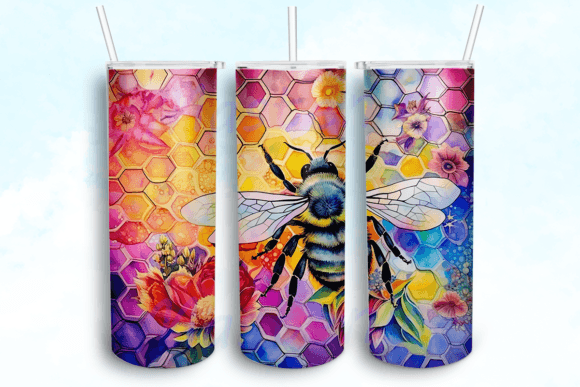
Bees Rainbows Tumbler PNG
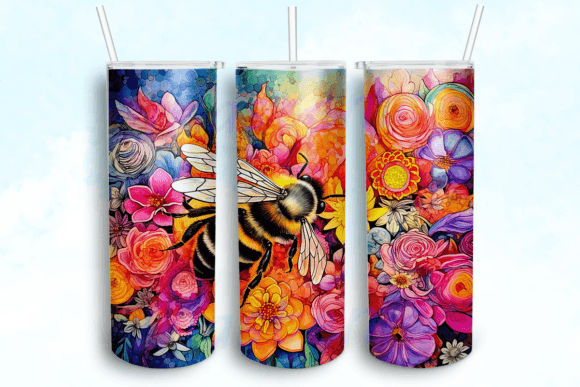
When I first opened the Bees Rainbows Tumbler PNG file, I immediately saw a cheerful, storybook-style design that wants to be more than just a sublimation wrap. The combination of plump little bees, soft rainbow arcs, and delicate floral accents creates a mood that feels both playful and gentle. As someone who spends most days evaluating artwork for embroidery, I noticed right away how the shape and composition would guide needle and thread across fabric. The design is anchored by a horizontal arrangement—perfect for a rectangular placement—and the 9.3-inch width gives it enough presence to be a focal point on a tote bag, the back of a sweatshirt, or a nursery wall hanging. The mood is sunny, a little nostalgic, and very giftable. It’s the kind of visual that makes a customer pause and smile, and that’s half the battle when you’re selling handmade products.
Even though the listing is for a Graphics download meant for 20oz skinny tumblers, my mind immediately went to embroidery. The straight and tapered PNG versions are sized for that specific tumbler template, but the artwork itself is a beautiful starting point for a custom embroidery project. The silhouette is clean, the bees are distinct without being overly detailed, and the rainbow bands are spaced evenly—all good signs for digitizing. When I look at a design for embroidery, I’m not just admiring the picture; I’m mentally tracing the stitch paths, thinking about thread colors, and anticipating where a satin stitch border might elevate the bees’ wings or where a fill stitch could make the rainbow pop. This design has that kind of potential.
A First Look That Sparks Project Ideas
The Bees Rainbows Tumbler PNG gave me an immediate creative itch. I pictured a crisp white linen kitchen towel with the bees and rainbow stitched in bright polyester threads, the colors secure and wash-fast. Then I thought about a soft unisex baby onesie, where the design could be scaled down into a small chest emblem. The bees themselves are round and friendly, not intimidating, which makes the theme perfect for baby and children’s items. The rainbow adds that universal appeal—everyone loves a rainbow, especially when it’s paired with something as universally loved as a bee. It’s a combination that reads as happy, organic, and a little whimsical, without being too childish. That matters for products that need to appeal to both kids and adults.
What I appreciate most is the design’s balance. The bees are spaced along the rainbow arcs, not cluttered, and the overall shape is horizontal. That layout works beautifully for rectangular embroidery fields like a pocket flap, a sweatshirt chest panel, or a banner across a tote bag. The tapered version of the PNG is slightly narrower at the top, which would be useful if you’re planning a design for a curved surface like a cap or a bucket hat. Even though the original file is for tumblers, having both a straight and tapered version gives you flexibility in how you compose the final embroidery canvas. I always tell crafters to think about the final shape of their product, and this design already offers two layout options.
When a Tumbler Graphic Becomes an Embroidery Star
Let’s get practical. The Bees Rainbows Tumbler PNG is not an embroidery file. It’s a high-resolution graphic that you would need to digitize before stitching. That’s not a drawback—it’s an opportunity. Many of my favorite custom embroidery projects started with a well-drawn PNG that I then traced, simplified, and assigned stitch types to. The 9.3-inch width is generous for a design, and if you’re planning to stitch it at that size, you’ll need a large hoop—at least 10x10 inches or bigger. For most home embroidery machines, that means splitting the design or using a repositionable hoop, which is doable but requires careful planning. For smaller projects like a child’s t-shirt or a patch, you’d need to scale it down, and that’s where the digitizing decisions become critical. You have to preserve the bees’ readability, make sure the rainbow stripes don’t merge into a blur, and keep the linework clean.
One thing I love about this design as a digitizing candidate is that the bees are not overly intricate. Their wings are simple, their bodies are solid enough to take a satin stitch edge, and the striped details can be hinted at with a few well-placed running stitches. The rainbow arcs are a joy to replicate in thread, because you can use a sequence of bright, smooth fill stitches that create a natural gradient. I’d probably use a slight overlap technique or even a satin stitch border between each color band to keep the edges crisp. The floral elements and tiny leaves that dot the design are exactly the kind of accent that makes hand-embroidered goods feel valuable. They add texture without being a nightmare to stitch out.
Real-Life Embroidery Test: A Custom Baby Quilt Block
To really see how this design would perform, I mentally walked through a project I’m currently working on for a client: a custom baby quilt with embroidered blocks. The client wanted something nature-themed, not too boyish or girlish, and with a bit of whimsy. Immediately, I thought of the Bees Rainbows Tumbler PNG as a center block. I’d scale it down to about 5 inches wide, keeping the bees no smaller than 1 inch each so they remain legible. I’d stitch it on a soft cotton-linen blend in a natural cream color, using a cutaway stabilizer to keep the fabric from puckering. The bees would be done in a golden yellow polyester thread with a dark charcoal outline for visibility, and the rainbow would be a series of narrow fill stitches in pastel shades. The threads would be subtle but cheerful, exactly what you’d want for a baby’s quilt.
In my mind, the result would be a piece that feels handmade but not homemade, if you know what I mean. The design’s charm would translate perfectly into thread, and the tactile quality of the embroidery would add a layer of luxury that a printed graphic can’t quite match. Customers notice that difference. When they hold a quilt block with raised, shiny stitches, they perceive higher value, and they’re willing to pay for it. That’s the kind of product I’d confidently list on Etsy or bring to a craft fair, knowing the visual appeal would draw people in. The bees and rainbow theme is universally loved, so it’s a safe bet for a variety of handmade products—pillow covers, nursery wall art, even a set of embroidered tea towels for a wedding shower gift.
Where to Use It, and Where to Be Careful
No design is perfect for every project, and the Bees Rainbows Tumbler PNG has some natural limitations worth noting. Because of its horizontal orientation, it’s not ideal for tall, narrow surfaces like a wine bag or a vertical pocket. The 9.3-inch width is a bit large for standard 4x4 or 5x7 hoops, so if you’re digitizing at full size, you’ll need a larger embroidery field. Also, the design’s fine details—the tiny antennae, the veining on the leaves—might get lost if you scale it down too far. I always recommend doing a test stitch on scrap fabric before committing to a final garment. Check the stitch density: if the rainbow fill is too dense, it can make the fabric stiff and uncomfortable against the skin, especially on baby clothes. Use a soft, lightweight stabilizer, and consider perforating the fill stitches slightly to keep the fabric drape.
Dark fabrics present another small challenge. The bees and the rainbow colors will pop beautifully against black or navy, but you’ll need to make sure the design doesn’t rely on the fabric showing through. I’d advise digitizing the rainbow with a solid underlay of white thread so the colors stay true, and I’d add a thin white outline around the bees to prevent them from disappearing into the background. Textured fabrics like terry cloth or loosely woven linen can cause the stitches to sink, so a topper is your friend. And for caps or curved surfaces, the tapered version of the PNG might be a better starting point, but you’ll still need to contour the embroidery to the curve of the hat. It’s not a one-click solution, but with a little patience, the result is worth it.
How This Design Elevates Your Handmade Brand
When I think about the crafts business, the Bees Rainbows Tumbler PNG represents a smart investment. It’s a digital asset that can be repurposed across multiple product types—embroidery, sublimation, paper crafts, and even printed fabric. That versatility means you’re not locked into one niche. An Etsy seller could use it to create a matching set of a sublimated tumbler and an embroidered tote bag, giving customers a cohesive brand experience. The theme is on-trend: bees and rainbows are popular, especially in the spring and summer, and they tie into eco-friendly, garden-loving aesthetics. Pair this design with organic cotton products and earthy packaging, and you’ve got a boutique look that commands higher prices.
From a customer trust angle, a well-executed embroidery based on this design says, “This maker cares about details.” The bees’ wings, the smooth rainbow arcs, the tiny flower buds—they all contribute to a finished product that looks intentional and professional. Buyers are more likely to leave positive reviews, share photos on social media, and return for future purchases. The design’s friendly, approachable personality also makes it a great gift item. I can easily imagine a new mom receiving a custom embroidered quilt with these bees and rainbows, or a teacher getting a tote bag with the design stitched on the front pocket. It’s the kind of product that triggers an emotional response, and emotional connection is what builds a loyal customer base.
Practical Pre-Stitch Checklist for Embroidery Designers
Before you digitize and stitch the Bees Rainbows Tumbler PNG, here’s my usual prep routine. First, open the PNG in a graphics program and look at it in grayscale. That exercise reveals any contrast issues that might become problems on fabric. The bees and rainbow stripes should still be distinguishable without color. Next, decide on your final stitch size. For a 9.3-inch wide embroidery, you’ll need a large hoop and a stable, non-stretchy fabric. If you’re scaling down to 4 or 5 inches, simplify the leaf details so they don’t stitch into a tangled mess. Thread choice is critical: I’d pick a palette of no more than 12 colors to keep changes manageable. For the bees, a variegated yellow thread can add a lovely natural texture without extra color stops.
Always test on a fabric similar to your final product. I use a medium-weight cotton with a medium cutaway stabilizer for most of my tests. Watch for any puckering around the rainbow ends, which is a common trouble spot. If the design has dense areas, consider adding a knockdown stitch underneath. And don’t forget to check the licensing terms of the original PNG download. Since it’s sold as a Graphics resource for tumblers, the seller may or may not allow commercial use on finished products. Always confirm that you can use the design as a basis for embroidery items you sell. Many digital product sellers are fine with it, but it’s your responsibility to check. A quick message to the seller can save you from headaches down the road.
The two included files—straight and tapered—are a nice touch. The straight PNG is ideal for flat embroidery surfaces, while the tapered one can be a better reference if you’re creating a design for a curved bag or a cap. I’d keep both versions in my design library and use them as templates for different product mockups. Even if you never stitch the exact tumbler wrap, the artwork is a valuable resource for your embroidery and craft business, ready to inspire new projects and keep your shop fresh and seasonal.